
Victim and Survivor Engagement Guide
Supporting better experiences for victims and survivors
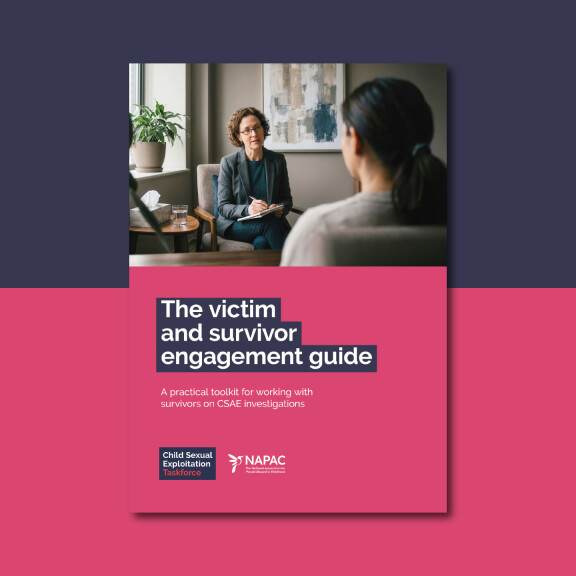
The Child Sexual Exploitation Taskforce, led by the Hydrant Programme in partnership with the National Association for People Abused in Childhood (NAPAC), has launched a new suite of resources to support professionals working with victims and survivors of child sexual abuse and exploitation (CSAE).
Developed using insight from policing professionals across England and Wales and informed by NAPAC’s Redefining Justice research, the resources provide practical guidance, conversation prompts and tools to help professionals communicate effectively, build trust and reduce avoidable disengagement from investigations
Why communications matters
For many victims and survivors, the quality of engagement they receive can have a significant impact on how they experience the criminal justice process. Feeling informed, listened to and supported can help build trust and confidence, while poor communication can contribute to feelings of frustration, confusion and disengagement.
The new resources recognise that every interaction matters and provide practical, trauma-informed guidance to help professionals communicate with empathy, clarity and consistency.
What's included?
The resource suite covers every stage of a CSAE investigation and includes:
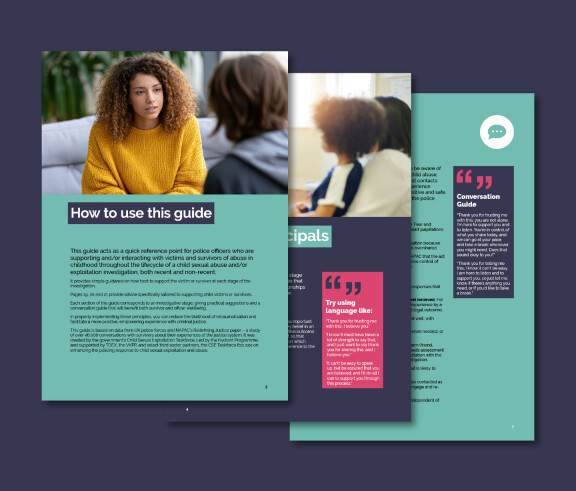
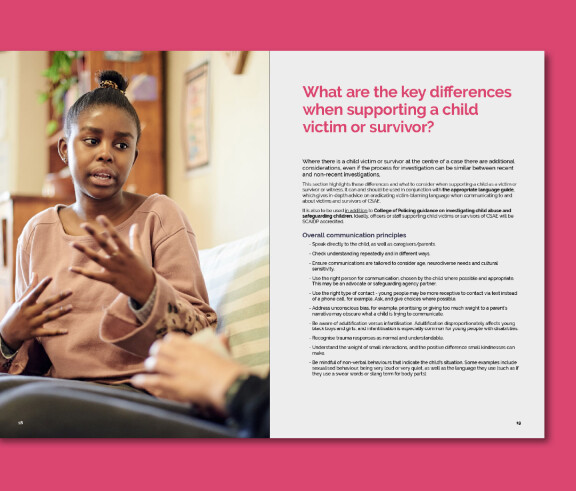
- A comprehensive Victim and Survivor Engagement Guide
- A practical Conversation Guide with language prompts for key investigative stages
- Guidance on supporting both adult and child victims and survivors
- Approaches to supporting victim and survivor re-engagement where appropriate
Informed by survivor insight
The guidance draws on findings from NAPAC’s Redefining Justice research, which captured more than 46,000 conversations with survivors about their experiences of seeking justice.
Together with consultation from frontline policing professionals, these insights highlight the importance of communication, consistency and transparency in shaping victims' and survivors' experiences of investigations and wider criminal justice processes.
A/Chief Constable Becky Riggs, NPCC Lead for Child Protection and Abuse Investigation, said:
"Victims and survivors of child sexual abuse and exploitation deserve to be treated with compassion, respect and understanding at every stage of the criminal justice process.
While outcomes are important, we know from listening to survivors that the way they are spoken to, supported and kept informed throughout an investigation, can have a lasting impact on their trust, confidence and recovery.
“These resources have been developed to give practical tools to help professionals communicate more effectively, build stronger relationships and create a more supportive experience throughout what can be an incredibly difficult journey."
Gabrielle Shaw, Chief Executive, NAPAC, said:
"The Victim and Survivor Engagement guide (VSEG) is built on two foundations – insights from conversations with more than 46,000 survivors and the operational expertise of officers from over a dozen UK police forces.
The result is a practical, evidence-based toolkit that reflects what survivors need and what the police can realistically deliver.
This is not about asking policing staff to become therapists. It is about equipping them with the knowledge and the confidence to adequately support and communicate with survivors at every stage of a CSAE investigation.
Time and time again, survivors describe a justice system that can feel unforgiving and overwhelming. While the system itself cannot be changed by a single officer, the way they communicate, explain processes and respond to individual needs can profoundly shape a survivor's experience of the justice process. This toolkit helps officers identify those opportunities and use them to make a meaningful difference.
Better experiences for survivors ultimately mean better outcomes for officers – reduced attrition, more effective investigations and greater confidence that the work they are doing is making a positive difference in survivors’ lives.”
Access the resources
The resources are designed for policing and safeguarding professionals and can be used to support consistent, trauma-informed and victim-centered practice across organisations.
-
The Victim and Survivor Engagement Guide animation (English)
-
The Victim and Survivor Engagement Guide animation (Welsh subtitles)
By embedding these approaches into everyday practice, organisations can help strengthen trust, reduce retraumatisation and improve experiences for victims and survivors navigating the criminal justice system. After all, how someone experiences the process matters just as much as the outcome.